What Is a Filibuster? The Senate Rule Explained
A filibuster lets a Senate minority block a vote by extending debate. Here's how Rule XXII, cloture, the 60-vote threshold, and the nuclear option actually work.
By Bill100 Team
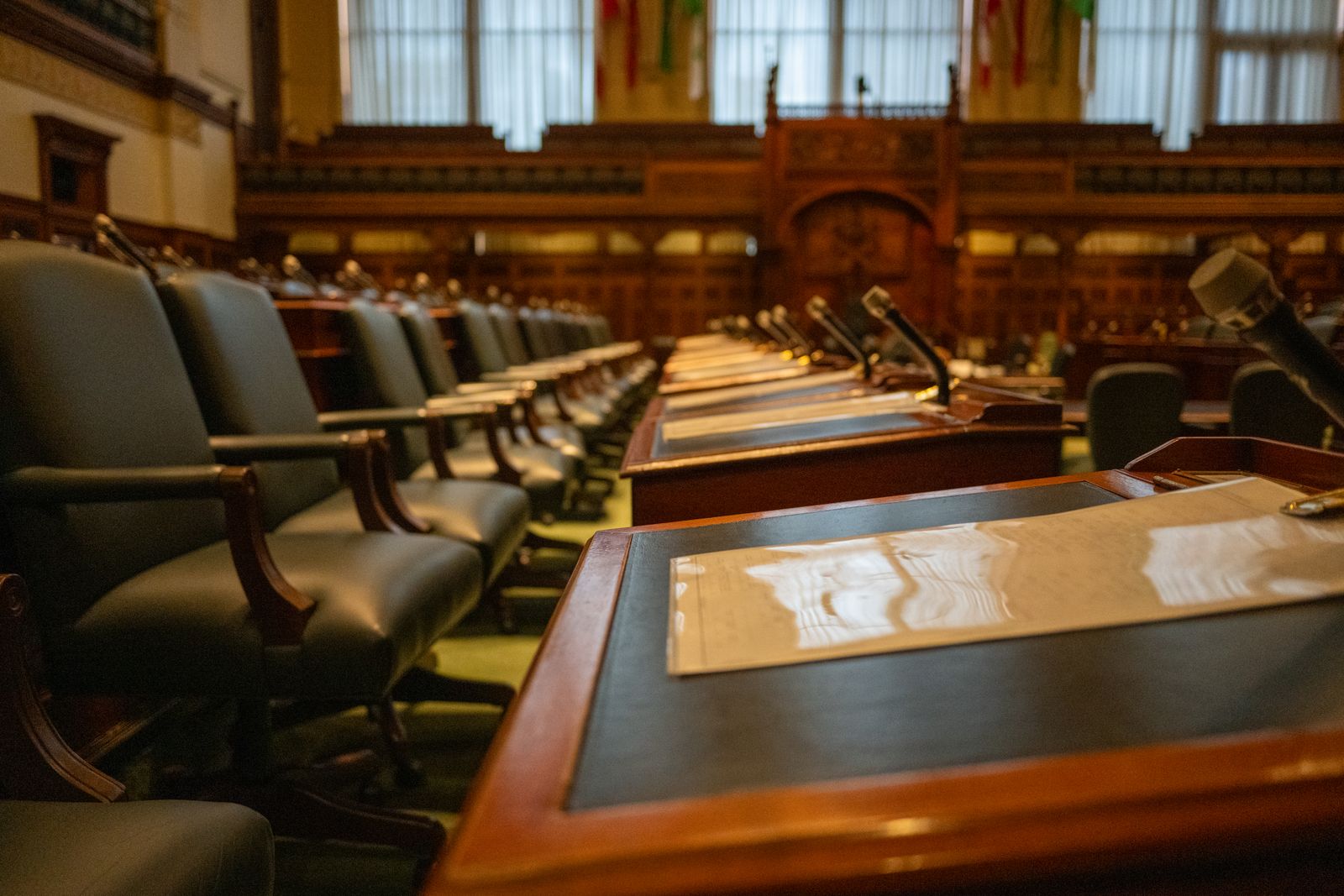
A filibuster is a delay tactic that lets a minority of U.S. senators block a vote on a bill or nomination, even when a majority supports it — traditionally by refusing to stop debating, but in practice today usually just by threatening to. Ending one requires a supermajority vote called cloture, which under Rule XXII needs 60 of the Senate's 100 votes. No comparable tool exists in the House of Representatives.
That's the whole mechanism in a sentence. The rest of this is about why the Senate built itself a rule that lets 41 senators outvote 59, how cloture actually forces the issue, what changed when Senate leaders started using the so-called nuclear option, and which Senate actions this all applies to — because a surprising number of them don't require 60 votes at all.
Where the Filibuster Comes From
The Senate didn't design the filibuster on purpose — it fell into one. In 1789, both chambers of Congress adopted a procedural tool called the previous question motion, which lets a simple majority vote to cut off debate immediately and force a vote. The House still uses it every day. The Senate, in 1806, dropped it from its rulebook in a routine cleanup of redundant procedures. Nobody intended to create unlimited debate; they just removed the one mechanism that had been capping it. It took decades for senators to notice — and exploit — the opening.
By the early 20th century, a handful of senators could and did talk a bill to death simply by not stopping. Matters came to a head in 1917 over a bill to arm U.S. merchant ships ahead of World War I: a small group of senators held the floor until the session ran out, killing the bill without a vote. With President Woodrow Wilson pushing hard for a fix, the Senate adopted Rule XXII that same year, creating cloture — a formal way to end debate — for the first time, initially requiring a two-thirds vote. In 1975, the Senate lowered that threshold to three-fifths of senators duly chosen and sworn, which is 60 votes in a fully seated 100-member Senate, and that's the number that has governed most cloture votes ever since (Senate.gov: About Filibusters and Cloture).
How Cloture Actually Works
Cloture is the only formal procedure the Senate has for cutting off debate and forcing a vote — how cloture actually ends a filibuster is worth reading on its own, but the mechanics in brief: at least 16 senators sign a cloture motion, it ripens after one legislative day, and then the Senate votes. For ordinary legislation and most nominations still covered by Rule XXII, that vote needs 60 yeas. If it gets them, the filibuster isn't over instantly — the rule caps whatever remains of debate at 30 additional hours, a window that includes not just speeches but roll-call votes, quorum calls, and procedural motions. Inside that window, amendments have to be germane, dilatory motions are barred, and no single senator can speak for more than an hour.
The 60-vote threshold applies to the vote that ends debate, not to the bill itself. A bill can clear cloture with exactly 60 votes and then pass on a 51-vote final tally — or fail outright after surviving cloture. Watching only the cloture vote tells you a bill survived the filibuster; it doesn't tell you the Senate actually wanted to pass it.
The Talking Filibuster vs. the Silent Filibuster
The filibuster most people picture — a senator holding the floor for hours, reading from a phone book or the Constitution, refusing to sit down — is the talking filibuster, and it's genuinely rare today. What ended its dominance was a change in how the Senate schedules business. Starting in the early 1970s, the chamber adopted a two-track system that lets it set a filibustered matter aside and move on to other work rather than grinding to a halt. That single scheduling change quietly transformed the filibuster from an act of physical endurance into a form letter: once a group of 41 or more senators signals it will object, the majority leader typically doesn't even bring the matter up, because everyone already knows a cloture vote would fail. Cloture-motion filings, which almost never happened before the two-track system, jumped into the double digits within a Congress almost immediately after it took hold (Brennan Center: The Filibuster Explained). That silent, procedural version — no floor speech required, just the threat — is now the default. The talking filibuster still happens on rare occasions and gets outsized media attention when it does, but it's the exception, not the mechanism doing the actual blocking.
There's a wrinkle worth knowing: a single bill can face two separate filibusters. Before the Senate can even debate a bill, it has to adopt a motion to proceed, and that motion is itself debatable — which means it can be filibustered, and getting past it can require its own 60-vote cloture vote, entirely separate from the cloture vote needed to end debate on the bill itself. In practice this means a bill everyone assumes is "just stuck" may actually be stuck at the doorway, before substantive debate has even started.
The Longest Filibusters on Record
The record for the longest individual Senate speech belonged to Strom Thurmond for 68 years: 24 hours and 18 minutes, beginning the evening of August 28, 1957, in an attempt to block the Civil Rights Act of 1957 (Senate.gov: Congressional Record, Thurmond's Filibuster, 1957). It was broken in 2025, when Senator Cory Booker held the floor for roughly 25 hours protesting the incoming Trump administration's policies — though, notably, that speech doesn't strictly qualify as a filibuster in the procedural sense, since it wasn't tied to blocking a specific pending vote (NPR: Cory Booker breaks a 68-year-old Senate record with a 25-hour speech). Both cases illustrate the same point: talking filibusters make headlines precisely because they're rare theater layered on top of a mechanism that, day to day, runs almost entirely on paperwork and vote counts.
What the "Nuclear Option" Actually Is
The nuclear option isn't a rule in the Senate's rulebook — it's a workaround for the fact that formally amending the rules is itself hard. Changing Rule XXII through the normal process would require a two-thirds vote, which is precisely the kind of supermajority a determined minority can block. So instead, a Senate majority can raise a point of order that reinterprets what a rule means, and — instead of letting the presiding officer's ruling stand — vote with a simple majority to overturn it, setting a new binding precedent without touching the rule's text.
It's been used twice on nominations. In November 2013, Senate Democrats, led by Majority Leader Harry Reid, used it to lower the cloture threshold for executive-branch and lower federal court nominees from 60 votes to a simple majority, explicitly carving out Supreme Court nominees. In April 2017, Senate Republicans under Majority Leader Mitch McConnell used the same maneuver to remove that Supreme Court carve-out, clearing a simple-majority path to confirm Neil Gorsuch after Democrats filibustered his nomination (Brookings: What Is the Senate Filibuster and What Would It Take to Eliminate It?). Legislation itself has never gone nuclear — the 60-vote threshold for ordinary bills is still intact, which is exactly why reconciliation, a separate carve-out with its own rules, has become the vehicle of choice for anything a majority actually wants to pass on its own.
What Can and Can't Be Filibustered
| Senate action | Vote threshold | Can it be filibustered? |
|---|---|---|
| Most bills and the motion to proceed to a bill | 60 votes to invoke cloture | Yes — this is the default |
| Budget reconciliation bills | Simple majority (51, or 50 + the Vice President) | No — debate is capped at 20 hours under the Byrd Rule |
| Executive-branch and lower federal court nominations | Simple majority | No — changed by the 2013 nuclear option |
| Supreme Court nominations | Simple majority | No — changed by the 2017 nuclear option |
| A formal change to the Senate's own rules text | 67 votes (two-thirds) | Yes — which is exactly why the nuclear option exists |
Vote thresholds for common Senate actions
That reconciliation row is doing a lot of work in Washington: it's the reason major tax and spending packages routinely pass with a bare majority while everything else needs 60 votes. If you want the full mechanics of how a bill qualifies for that path and what the Byrd Rule actually strips out, see Reconciliation Bill, Explained (CRS RL30862: The Budget Reconciliation Process).
Why Doesn't the House Have a Filibuster?
Because it kept the tool the Senate accidentally threw away. The House never lost its previous question motion — a member can move it at the end of debate, and if a simple majority agrees, debate ends immediately and the bill goes to a vote. Combined with a Rules Committee that sets a specific debate structure for nearly every bill before it reaches the floor, the House is built around majority control of the calendar. With 435 members instead of 100, unlimited individual debate simply wasn't workable at that scale, and the chamber never developed a minority veto to match the Senate's. A member can still be talked out on the floor, but a House majority always has a clean, fast way to force the vote — the Senate, by design and by accident both, does not.
This is also why the filibuster only ever shows up as a Senate-side obstacle in a bill's life. If you're tracking a bill's path from introduction through enactment, the six stages in How a Bill Becomes a Law still apply — the filibuster just means the Senate stages can stall indefinitely in a way the House stages structurally can't. Bills tied to contested policy areas — immigration, gun policy, healthcare — tend to accumulate the longest filibuster-driven waits, and browsing those by topic or watching a bill's live status on Bill100 is usually a faster way to see that than reading floor transcripts.
Why This Is a Live Debate Right Now
The push to change this rule isn't hypothetical — it resurfaces almost every Congress, usually when a party controls enough seats to pass something on a party-line vote but falls short of 60. In early 2026, that pressure centered on the SAVE America Act, an election-related bill that couldn't clear cloture; some Senate Republicans, encouraged by President Trump, urged Majority Leader John Thune to force a genuine talking filibuster — requiring every opposing senator to hold the floor in person rather than block the bill by threat alone — on the bet that a marathon of live speeches would eventually exhaust Democratic opposition. Thune declined, judging that even a talking filibuster wouldn't produce the votes to pass the bill (NPR: Under pressure from President Trump, can the filibuster survive 2026?). The episode is a useful reminder that "reforming the filibuster" rarely means abolishing it outright — more often it means forcing the talking version back into use, or carving out one more nuclear-option exception, while leaving Rule XXII itself on the books.
Is a filibuster in the Constitution?
No. The Constitution doesn't mention unlimited debate or a supermajority requirement to end it. The filibuster exists because the Senate's own Rule XXII allows it — and because the Senate, unlike the House, can set its own rules however it chooses each new Congress.
How many votes does it take to end a filibuster?
Sixty, for most legislation and for the motion to proceed to a bill — three-fifths of the full Senate under Rule XXII. Nominations are different: since the 2013 and 2017 nuclear-option votes, ending a filibuster on executive, judicial, and Supreme Court nominees only takes a simple majority.
Can a filibuster be used in the House?
No. The House can end debate on almost anything with a simple-majority vote on the previous question motion, so there's no equivalent minority-blocking tool. Unlimited debate is a Senate-specific feature, not a general feature of Congress.
What's the difference between a filibuster and a hold?
A hold is a senator privately telling their party leader they'll object to passing a bill by unanimous consent, which effectively threatens a filibuster without any floor speech or public vote. It's an informal courtesy, not a rule — leadership can ignore a hold and force a cloture vote anyway, though in practice holds are often enough to stall a bill quietly for weeks or months.
See exactly where a bill stands — including whether it's stalled on a Senate filibuster threat — with live status tracking.
Browse billsBill100 mirrors the public U.S. legislative record from Congress.gov and GovTrack and adds plain-English AI summaries. It is an information tool, not legal, compliance or lobbying advice, and it is not affiliated with the U.S. Congress or any government agency. AI summaries can simplify or omit detail — every bill links to the official source; verify there before you rely on it. To look up a real bill, search Bill100’s bill index, or see how the same data works from your own code or an AI agent.
More guides
Track a bill, then build on it
Track a bill free, then get an API key for your software or your AI agent — no card to start.